 BOOK APPOINTMENT



Best Engagement Rings Under $5,000: How to Get the Most for Your Money
December 2nd, 2025
Best Engagement Rings Under $5,000: How to Get the Most for Your Money
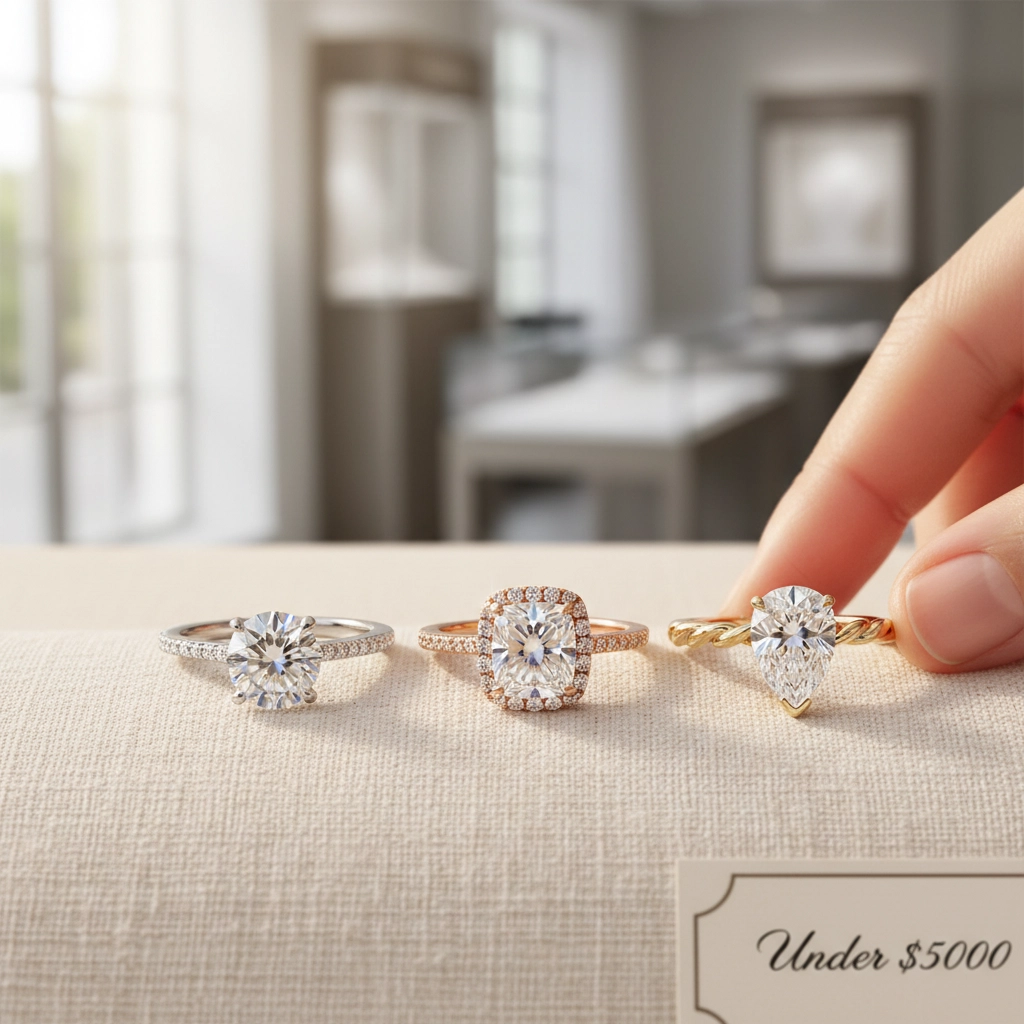
A budget of $5,000 for an engagement ring is more powerful than many people realize. With the right strategy, you can get a ring that looks impressive, feels personal, and holds its value over time. The key is understanding how to balance the diamond's cut, size, color, clarity, metal, and setting so every dollar goes toward what actually matters on the finger.
This guide explains what you can realistically expect from the best engagement rings under $5,000, how to prioritize the 4Cs, which shapes and settings stretch your budget, and how to shop confidently, whether you choose a natural or lab‑grown diamond.
Understanding What $5,000 Can Really Get You
When you think “under $5,000,” the first question is usually, “How big of a diamond can I get?” That’s important, but it’s not the only factor. At this price point, you’re aiming for the best overall appearance, not just the highest carat number.
With a budget of up to $5,000, you can typically find:
- A well-cut natural diamond in a classic solitaire or halo setting
- A larger lab‑grown diamond with excellent cut and strong visual impact
- Quality metals like 14k or 18k gold, and in some cases platinum, depending on design choices
Most buyers will make trade-offs such as:
- Choosing a slightly smaller carat weight with better cut and sparkle
- Opting for near-colorless rather than top color grades
- Selecting “eye‑clean” clarity rather than paying for flawless on paper
The best value comes from prioritizing the diamond's cut and how the ring looks on the hand, instead of chasing the biggest possible stone or the highest grades in every category.
The 4Cs on a $5,000 Budget (Where to Prioritize)
The 4Cs—cut, carat, color, and clarity—determine both how a diamond looks and how much it costs. On a $5,000 budget, how you rank them matters.
Cut — Non‑Negotiable for Sparkle
Cut is the single most important factor in how bright and lively a diamond appears. A well-cut stone will reflect light more efficiently, often looking larger and more impressive than a poorly cut diamond of higher carat weight.
On a limited budget, it makes sense to:
- Keep cut at the top of your priority list
- Prefer excellent or ideal cut grades where available
- Avoid sacrificing cut quality just to reach a specific carat number
Carat — Think “Looks Bigger,” Not Just “Is Bigger”
Carat is the measure of weight, but what matters to the eye is how large the stone appears from the top. A slightly smaller, well-cut diamond with a smart setting can look better than a heavier stone that lacks sparkle.
To maximize perceived size:
- Consider settings that boost visual spread, such as halos or thin bands
- Look at elongated shapes, which cover more of the finger
- Be flexible about exact carat numbers instead of chasing round thresholds like 1.00 ct
Color — Finding the Sweet Spot
At this budget, you usually don't need the highest color grades to get a beautiful ring. Many diamonds that are technically lower in color still look bright and white once set, especially in the right metal.
Smart approaches include:
- Choosing a near-colorless range that appears white to the eye
- Pairing slightly warmer diamonds with yellow or rose gold to minimize visible color
- Focusing on overall appearance rather than the letter on the grading report
Clarity — Focus on Eye‑Clean, Not Perfect
Clarity describes how many internal or external characteristics (inclusions and blemishes) a diamond has. Many of these are only visible under magnification and have little impact on appearance.
To stretch your budget:
- Aim for “eye‑clean” diamonds where inclusions are not visible without magnification
- Avoid paying extra for high clarity grades that you can't see in normal viewing conditions
- Evaluate stones in person whenever possible to confirm how they look to the naked eye
Best Diamond Shapes for Engagement Rings Under $5,000
Shape has a major impact on both style and value. Some shapes cost more per carat, while others offer more visible size for the same budget.
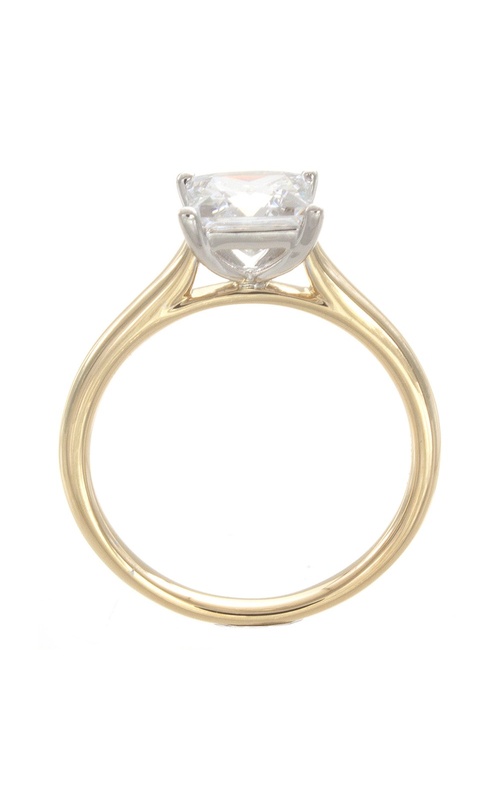
Round Brilliant vs Fancy Shapes
Round brilliant diamonds are the most popular and standardized shape. They typically deliver excellent sparkle but also command a premium price per carat. That can limit the size you can afford under $5,000.
Fancy shapes, such as oval, cushion, emerald, and pear, often:
- Cost less per carat than round diamonds
- Offer more face-up area for the same weight
- Provide unique style options without sacrificing elegance
If you're open to different looks, considering fancy shapes is one of the easiest ways to maximize value.
Cushion Cut and Other Budget‑Friendly Options
Cushion cut diamonds are a strong option for buyers who want something classic yet slightly different from round. They have a soft, square or rectangular outline with rounded corners and can offer strong value per carat.
Cushion cuts often work well in:
- Halo settings that enhance their soft outline
- Vintage-inspired designs with milgrain or filigree details
- Simple solitaires where the shape itself makes a statement
If you're exploring this shape, it helps to compare multiple stones and facet patterns. You can also review dedicated options such as cushion cut diamonds to understand how different cuts and proportions affect price and appearance.
Elongated Shapes for Maximum Finger Coverage
Elongated shapes, like ovals, pears, elongated cushions, and marquise diamonds, tend to look larger than their carat weight suggests because they cover more of the finger's length.
Advantages of elongated shapes include:
- A visually larger footprint for the same carat weight
- A graceful, elegant look that flatters many hand shapes
- Strong presence in both simple and detailed settings
For shoppers focused on visible size while staying under $5,000, these shapes are worth serious consideration.
Settings That Maximize the Look Under $5,000
The setting does more than hold the diamond; it frames it. The right design can make a thoughtful budget feel like a much larger one.
Solitaires — Clean, Classic, and Budget‑Friendly
Solitaires feature a single diamond on a simple band. Because the design is minimal, most of the budget can go directly into the center stone.
Benefits include:
- Timeless, versatile style
- Lower metal and labor costs than highly detailed designs
- Easy pairing with almost any wedding band
Thin bands, cathedral shoulders, and subtle details can add elegance without dramatically increasing cost.
Halo Settings — Bigger Look Without Big Cost
Halo settings surround the center diamond with a ring of smaller stones. This design:
- Makes the center stone look larger
- Adds sparkle from multiple angles
- Uses smaller diamonds that cost less per carat
For buyers who want a "wow" effect under $5,000, halos are a practical option.
Pavé and Hidden Halos
Pavé bands and hidden halo details add extra interest while keeping the center stone at a manageable size.
- Pavé bands use small diamonds along the band to create continuous sparkle
- Hidden halos are placed under the center stone for a subtle, elevated look
These details can increase perceived luxury without requiring a major jump in diamond size. Just keep in mind that more small stones and prongs may mean more maintenance over time.
Choosing the Right Metal for Your Budget
Metal choice influences both the look and the price of an engagement ring.
14K vs 18K vs Platinum
Each option has its own balance of durability, color, and cost:
- 14k gold: Durable and typically more affordable; a practical choice under $5,000
- 18k gold: Richer color with higher gold content, usually at a higher price point
- Platinum: Dense, naturally white metal with a premium price and strong durability
For many buyers in this budget range, 14k gold offers a solid mix of appearance, longevity, and value.
White, Yellow, or Rose Gold
Color choice affects how the diamond appears:
- White gold emphasizes a bright, modern look and can make near-colorless stones appear whiter
- Yellow gold adds warmth and can pair well with slightly lower color grades
- Rose gold offers a romantic, modern tone that complements many skin tones
Rather than chasing trends, it's best to choose a metal that matches long-term personal style and lifestyle.
Natural vs Lab‑Grown Diamonds Under $5,000
Both natural and lab‑grown diamonds can work within a $5,000 budget; they simply trade off different benefits.
With natural diamonds, you typically get:
- A smaller stone for the same budget compared to lab‑grown
- A sense of rarity and traditional appeal
- Established expectations for long-term perceived value
With lab‑grown diamonds, you may see:
- Larger sizes or higher grades for the same budget
- A focus on current appearance and value today
- Different expectations for resale and long-term market behavior
The right choice depends on your priorities: whether you favor tradition and rarity, or maximum size and quality within your current budget, rather than one option being universally "better."
Example Engagement Ring Builds Under $5,000
It can be easier to understand the possibilities when you see real-world style scenarios. Here are a few examples of what buyers might aim for under $5,000, depending on exact market pricing and specifications:
Example 1: Classic Solitaire (Natural Diamond)
- Around a 0.70 ct well-cut round diamond
- Near-colorless, eye‑clean clarity
- 14k white or yellow gold solitaire setting
Example 2: Halo Cushion Cut (Natural Diamond)
- Around a 0.60 ct cushion cut center stone
- Halo of small diamonds to boost visual size
- 14k gold band for a vintage-inspired look
Example 3: Lab‑Grown Statement Ring
- Around a 1.50 ct lab‑grown oval or cushion
- Simple solitaire to highlight the center stone
- 14k or 18k gold band depending on preference
Example 4: Vintage‑Inspired Under $5K
- Smaller center diamond with detailed side stones
- Milgrain edges and engraving for an antique feel
- 14k gold to keep within budget
Exploring a range of engagement rings can help you see which combinations of diamond size, shape, and setting feel right for your style and budget.
How to Shop Smart (And Avoid Common Mistakes)
A few simple habits can prevent costly missteps and make the process more straightforward:
- Compare diamonds side by side instead of relying only on grading reports
- View stones in multiple lighting conditions, not just under bright showroom lights
- Avoid fixating on "milestone" carat weights if it means sacrificing cut or overall appearance
- Prioritize working with reputable jewelers and authentic grading reports
- Think ahead about future needs such as a matching wedding band or resizing
Starting your research online with a trusted jeweler like Solomon Brothers and then narrowing your choices in person is often the most efficient and confident way to buy.
Care and Maintenance for Engagement Rings Under $5,000
Once you've found the right ring, proper care helps protect your investment and keep it looking its best.
Good maintenance practices include:
- Scheduling professional cleanings and inspections every 6–12 months
- Cleaning the ring at home with warm soapy water and a soft brush
- Removing the ring for heavy lifting, gym workouts, or impact-prone activities
- Storing the ring separately from other jewelry to avoid scratches
Consistent care supports both the appearance and long-term durability of your engagement ring, regardless of its price point.
Frequently Asked Questions About Engagement Rings Under $5,000
1. Can I get a "nice" engagement ring for under $5,000?
Yes. The best engagement rings under $5,000 prioritize cut quality, smart shape choices, and well-designed settings. By focusing on overall appearance instead of chasing the highest grades in every category, you can achieve a ring that looks impressive and meaningful.
2. Is it better to prioritize carat or cut on a $5,000 budget?
Cut should come first. A well-cut diamond will look brighter, more lively, and often larger than a poorly cut stone of higher carat weight. Once cut is taken care of, you can balance carat, color, and clarity according to your preferences.
3. Should I consider lab‑grown diamonds if my budget is under $5,000?
Lab‑grown diamonds can be a strong option if you want a larger stone or higher grades within a fixed budget. They offer significant visual impact for the price, while natural diamonds may appeal more to those who prioritize rarity and traditional value.
4. What is the best engagement ring setting style for a smaller budget?
Simple solitaires and halo settings are often the best choices for engagement rings under $5,000. Solitaires allow you to focus budget on the center stone, while halos add perceived size and sparkle using smaller, more affordable diamonds.
5. How much should I spend on the diamond vs the setting?
There is no single correct split, but many buyers allocate most of the budget to the center stone and choose a clean, well-made setting that supports it. The goal is to balance a high-quality diamond with a secure, attractive setting that fits the wearer's style and lifestyle.
Next Steps for Finding the Best Engagement Ring Under $5,000
A $5,000 budget gives you room to create a thoughtful, high-quality engagement ring if you approach the process strategically. Start by clarifying your priorities among size, sparkle, and style, then narrow down shapes, settings, and metals that support those goals. Comparing a few well-chosen options side by side will make it easier to see which combinations deliver the most impact for your budget.
If you're ready to see how these ideas translate into real rings, consider visiting the Sharpsburg jewelry store from Solomon Brothers if you are near Sharpsburg, Peachtree City, Newnan, Fayetteville, or Senoia. An in‑person visit with an experienced team can help you compare different shapes, settings, and diamond types under $5,000 so you can choose an engagement ring that fits both your budget and your long‑term vision.